
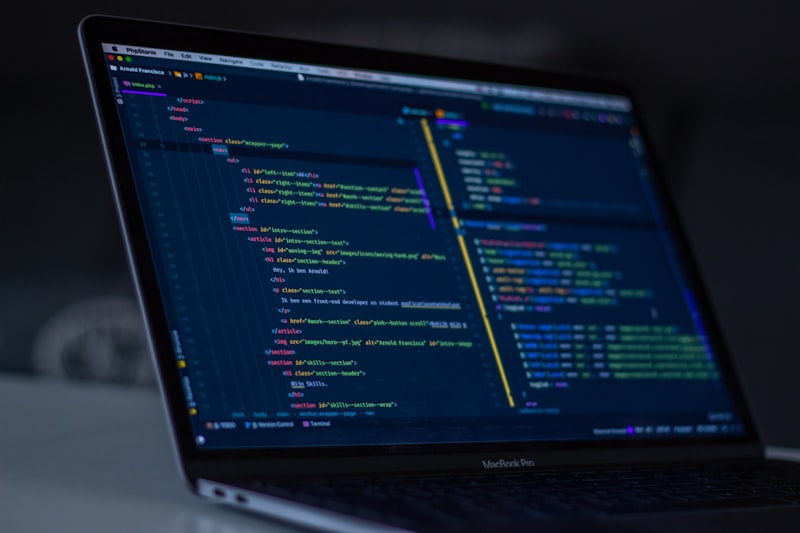
PHP gets a bad reputation from its early days. Modern PHP — especially PHP 8.x with Laravel — is a powerful, elegant, and highly productive language for enterprise applications. Here’s why.
The Modern PHP Renaissance
PHP 8 introduced union types, named arguments, match expressions, attributes, fibers, and enums. PHP 8.1 and 8.2 added readonly properties, intersection types, and performance improvements. Modern PHP is a fundamentally different language from the PHP of fifteen years ago.
Laravel leverages these features to provide an expressive, type-safe development experience. The framework’s evolution has tracked PHP’s improvements closely, resulting in code that’s both readable and robust.
Why Laravel for Enterprise
Enterprise applications need reliability, maintainability, and the ability to scale both the software and the team. Laravel delivers on all three fronts.
The framework’s conventions mean new developers can onboard quickly. A Laravel application’s structure is predictable — controllers, models, migrations, services, and jobs all live where you’d expect. This consistency reduces onboarding time from weeks to days.
The Ecosystem Advantage
Laravel’s ecosystem is unmatched in the PHP world. Forge handles server provisioning and deployment. Vapor provides serverless deployment on AWS Lambda. Horizon monitors Redis queues with a beautiful dashboard. Nova provides an admin panel framework. Scout adds full-text search. Cashier handles subscription billing.
Each of these would take weeks to build from scratch. With Laravel, they’re composer packages away.
Testing and Quality
Laravel is built with testing in mind. The framework ships with PHPUnit integration, HTTP testing helpers, database testing traits, and mock support. Writing tests for a Laravel application is straightforward, which means teams actually write them.
The artisan test runner, combined with Pest (a testing framework that works beautifully with Laravel), makes TDD practical rather than aspirational.
Performance at Scale
Laravel Octane, powered by Swoole or RoadRunner, keeps the application in memory between requests. This eliminates the bootstrap overhead of traditional PHP and delivers performance comparable to Node.js or Go for many workloads.
Combined with Redis caching, database query optimisation, and queue-based background processing, Laravel applications handle enterprise-scale loads without exotic infrastructure.
Security Built In
Laravel provides CSRF protection, SQL injection prevention through Eloquent, XSS protection through Blade templating, and encryption out of the box. These aren’t features you enable — they’re defaults you’d have to deliberately disable. This security-by-default approach means fewer vulnerabilities in production.
Our Experience
At Masterpiece Designs, we’ve built backends for applications serving hundreds of thousands of users with Laravel. The framework has never been the bottleneck. It provides the structure and tools enterprise applications demand while remaining a pleasure to work with.